Passer du temps a approfondir ce qui compte
Mettre les choses a plat... clarifier
Exposer... mettre au soleil, a jour, au jour
Respirer
Tout ca cela veux dire... pratiquement... ecrire
TO WRITE
le matin tot
si la pensee est sauvage et vagabonde, je vais lui offrir - avec l'aide mon guide, de mon ami, de mes soutiens - je vais lui offrir une vaste, verte et grasse pature... un champs ouvert et vert, en un lieu magnifique ou l'air est pur...
Qu'elle saute, coure et joue tant qu'elle veut
La pensee s'apaisera, la pensee s'epuisera et s'afermira en meme temps
Ecrire... prendre le temps pour que les choses se reposent en ce reposoir de la pensee
Puis fermer le cahier
Tourner la page et... vivre

a querry in Ubin
Friday, November 27, 2009


A prayer and its resonnance, The goal of human life
In my spiritual practice I encounter this simple prayer, which becomes like a daily companion.
And as a daily companion I realise that my relationship to it can oscillate between: ignoring each other, being bored at each other, or on the other side: marveling, wondering and rediscovering each other every time...
Of course, I do not need telling you which is more frequent, and which is most exiting.... I guess it is up to me to create the routine I like... and make the ordinary extra-ordinary
Oh Master (Oh Divine Master, the Master within me)
You are the real goal of human life. There are many goals in life some of which are more real.... wealth will stop being useful the day I die... Fame too.... In fact almost everything has used only from a material point of view... Is there anything in life that serves for after life? Is there anything after life?
The soul... what is the soul made of?
Who is the guardian of our soul?
Oh Master, yes I do start to feel some infinite wisdom in the prayer...
Some questions with "infinite" answers...
A sense of wonder in life... That goes with life...
Where life goes, so goes wonder
So be it
Sunday, November 15, 2009
NETS, Gross and and Balance Sheet
We have what we deserve
What is it to be said?
A training slash teambuilding
Slash.... slash
as the horses start advancing, the whips criss
slash, slash
fear, stress, anger, uncomfort,
dealing with that, dealing with what is
a different form of magic
seizing the reins and
reigning in
let s start, slowly first, let s start
ho poor beast ho can you hear me
do you do you?
do you feel....on your rough skin, the skin of my hand rubbing you
rubbing you... left and right...
as you get used to it... we start moving together
and you lead me and I lead you
Wednesday, October 28, 2009
Thelonious Sphere Monk, the one name that came when asked my favorite music
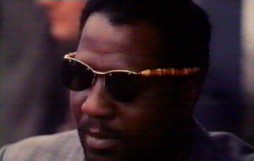
Thelonious Sphere Monk. Time for me to explore and discover more about this amazing musician.
(October 10, 1917-February 17, 1982)
"You know, anybody can play a composition and use far-out chords and make it sound wrong. It’s making it sound right that’s not easy." Thelonious Monk, 1961
With the arrival Thelonious Sphere Monk, modern music—let alone modern culture--simply hasn’t been the same. Recognized as one of the most inventive pianists of any musical genre, Monk achieved a startlingly original sound that even his most devoted followers have been unable to successfully imitate. His musical vision was both ahead of its time and deeply rooted in tradition, spanning the entire history of the music from the “stride” masters of James P. Johnson and Willie “the Lion” Smith to the tonal freedom and kinetics of the “avant garde.” And he shares with Edward “Duke” Ellington the distinction of being one of the century’s greatest American composers. At the same time, his commitment to originality in all aspects of life—in fashion, in his creative use of language and economy of words, in his biting humor, even in the way he danced away from the piano—has led fans and detractors alike to call him “eccentric,” “mad” or even “taciturn.” Consequently, Monk has become perhaps the most talked about and least understood artist in the history of jazz.
Born on October 10, 1917, in Rocky Mount, North Carolina, Thelonious was only four when his mother and his two siblings, Marion and Thomas, moved to New York City. Unlike other Southern migrants who headed straight to Harlem, the Monks settled on West 63rd Street in the “San Juan Hill” neighborhood of Manhattan, near the Hudson River. His father, Thelonious, Sr., joined the family three years later, but health considerations forced him to return to North Carolina. During his stay, however, he often played the harmonica, ‘Jew’s harp,” and piano—all of which probably influenced his son’s unyielding musical interests. Young Monk turned out to be a musical prodigy in addition to a good student and a fine athlete. He studied the trumpet briefly but began exploring the piano at age nine. He was about nine when Marion’s piano teacher took Thelonious on as a student. By his early teens, he was playing rent parties, sitting in on organ and piano at a local Baptist church, and was reputed to have won several “amateur hour” competitions at the Apollo Theater.
Admitted to Peter Stuyvesant, one of the city’s best high schools, Monk dropped out at the end of his sophomore year to pursue music and around 1935 took a job as a pianist for a traveling evangelist and faith healer. Returning after two years, he formed his own quartet and played local bars and small clubs until the spring of 1941, when drummer Kenny Clarke hired him as the house pianist at Minton’s Playhouse in Harlem.
Minton’s, legend has it, was where the “bebop revolution” began. The after-hours jam sessions at Minton’s, along with similar musical gatherings at Monroe’s Uptown House, Dan Wall’s Chili Shack, among others, attracted a new generation of musicians brimming with fresh ideas about harmony and rhythm—notably Charlie Parker, Dizzy Gillespie, Mary Lou Williams, Kenny Clarke, Oscar Pettiford, Max Roach, Tadd Dameron, and Monk’s close friend and fellow pianist, Bud Powell. Monk’s harmonic innovations proved fundamental to the development of modern jazz in this period. Anointed by some critics as the “High Priest of Bebop,” several of his compositions (“52nd Street Theme,” “Round Midnight,” “Epistrophy” [co-written with Kenny Clarke and originally titled “Fly Right” and then “Iambic Pentameter”], “I Mean You”) were favorites among his contemporaries.
Yet, as much as Monk helped usher in the bebop revolution, he also charted a new course for modern music few were willing to follow. Whereas most pianists of the bebop era played sparse chords in the left hand and emphasized fast, even eighth and sixteenth notes in the right hand, Monk combined an active right hand with an equally active left hand, fusing stride and angular rhythms that utilized the entire keyboard. And in an era when fast, dense, virtuosic solos were the order of the day, Monk was famous for his use of space and silence. In addition to his unique phrasing and economy of notes, Monk would “lay out” pretty regularly, enabling his sidemen to experiment free of the piano’s fixed pitches. As a composer, Monk was less interested in writing new melodic lines over popular chord progressions than in creating a whole new architecture for his music, one in which harmony and rhythm melded seamlessly with the melody. “Everything I play is different,” Monk once explained, “different melody, different harmony, different structure. Each piece is different from the other. . . . [W]hen the song tells a story, when it gets a certain sound, then it’s through . . . completed.”
Despite his contribution to the early development of modern jazz, Monk remained fairly marginal during the 1940s and early 1950s. Besides occasional gigs with bands led by Kenny Clarke, Lucky Millinder, Kermit Scott, and Skippy Williams, in 1944 tenor saxophonist Coleman Hawkins was the first to hire Monk for a lengthy engagement and the first to record with him. Most critics and many musicians were initially hostile to Monk’s sound. Blue Note, then a small record label, was the first to sign him to a contract. Thus, by the time he went into the studio to lead his first recording session in 1947, he was already thirty years old and a veteran of the jazz scene for nearly half of his life. But he knew the scene and during the initial two years with Blue Note had hired musicians whom he believed could deliver. Most were not big names at the time but they proved to be outstanding musicians, including trumpeters Idrees Sulieman and George Taitt; twenty-two year-old Sahib Shihab and seventeen-year-old Danny Quebec West on alto saxophones; Billy Smith on tenor; and bassists Gene Ramey and John Simmons. On some recordings Monk employed veteran Count Basie drummer Rossiere “Shadow” Wilson; on others, the drum seat was held by well-known bopper Art Blakey. His last Blue Note session as a leader in 1952 finds Monk surrounded by an all-star band, including Kenny Dorham (trumpet), Lou Donaldson (alto), “Lucky” Thompson (tenor), Nelson Boyd (bass), and Max Roach (drums). In the end, although all of Monk’s Blue Note sides are hailed today as some of his greatest recordings, at the time of their release in the late 1940s and early 1950s, they proved to be a commercial failure.
Harsh, ill-informed criticism limited Monk’s opportunities to work—opportunities he desperately needed especially after his marriage to Nellie Smith in 1947, and the birth of his son, Thelonious, Jr., in 1949. Monk found work where he could, but he never compromised his musical vision. His already precarious financial situation took a turn for the worse in August of 1951, when he was falsely arrested for narcotics possession, essentially taking the rap for his friend Bud Powell. Deprived of his cabaret card—a police-issued “license” without which jazz musicians could not perform in New York clubs—Monk was denied gigs in his home town for the next six years. Nevertheless, he played neighborhood clubs in Brooklyn—most notably, Tony’s Club Grandean, sporadic concerts, took out-of-town gigs, composed new music, and made several trio and ensemble records under the Prestige Label (1952-1954), which included memorable performances with Sonny Rollins, Miles Davis, and Milt Jackson. In the fall of1953, he celebrated the birth of his daughter Barbara, and the following summer he crossed the Atlantic for the first time to play the Paris Jazz Festival. During his stay, he recorded his first solo album for Vogue. These recordings would begin to establish Monk as one of the century’s most imaginative solo pianists.
In 1955, Monk signed with a new label, Riverside, and recorded several outstanding LP’s which garnered critical attention, notably Thelonious Monk Plays Duke Ellington, The Unique Thelonious Monk, Brilliant Corners, Monk’s Music and his second solo album, Thelonious Monk Alone. In 1957, with the help of his friend and sometime patron, the Baroness Pannonica de Koenigswarter, he had finally gotten his cabaret card restored and enjoyed a very long and successful engagement at the Five Spot Café with John Coltrane on tenor saxophone, Wilbur Ware and then Ahmed Abdul-Malik on bass, and Shadow Wilson on drums. From that point on, his career began to soar; his collaborations with Johnny Griffin, Sonny Rollins, Art Blakey, Clark Terry, Gerry Mulligan, and arranger Hall Overton, among others, were lauded by critics and studied by conservatory students. Monk even led a successful big band at Town Hall in 1959. It was as if jazz audiences had finally caught up to Monk’s music.
By 1961, Monk had established a more or less permanent quartet consisting of Charlie Rouse on tenor saxophone, John Ore (later Butch Warren and then Larry Gales) on bass, and Frankie Dunlop (later Ben Riley) on drums. He performed with his own big band at Lincoln Center (1963), and at the Monterey Jazz Festival, and the quartet toured Europe in 1961 and Japan in 1963. In 1962, Monk had also signed with Columbia records, one of the biggest labels in the world, and in February of 1964 he became the third jazz musician in history to grace the cover of Time Magazine.
However, with fame came the media’s growing fascination with Monk’s alleged eccentricities. Stories of his behavior on and off the bandstand often overshadowed serious commentary about his music. The media helped invent the mythical Monk—the reclusive, naïve, idiot savant whose musical ideas were supposed to be entirely intuitive rather than the product of intensive study, knowledge and practice. Indeed, his reputation as a recluse (Time called him the "loneliest Monk") reveals just how much Monk had been misunderstood. As his former sideman, tenor saxophonist Johnny Griffin, explained, Monk was somewhat of a homebody: "If Monk isn't working he isn't on the scene. Monk stays home. He goes away and rests." Unlike the popular stereotypes of the jazz musician, Monk was devoted to his family. He appeared at family events, played birthday parties, and wrote playfully complex songs for his children: "Little Rootie Tootie" for his son, "Boo Boo's Birthday" and “Green Chimneys” for his daughter, and a Christmas song titled “A Merrier Christmas.” The fact is, the Monk family held together despite long stretches without work, severe money shortages, sustained attacks by critics, grueling road trips, bouts with illness, and the loss of close friends.
During the 1960s, Monk scored notable successes with albums such as Criss Cross, Monk’s Dream, It’s Monk Time, Straight No Chaser, and Underground. But as Columbia/CBS records pursued a younger, rock-oriented audience, Monk and other jazz musicians ceased to be a priority for the label. Monk’s final recording with Columbia was a big band session with Oliver Nelson’s Orchestra in November of 1968, which turned out to be both an artistic and commercial failure. Columbia’s disinterest and Monk’s deteriorating health kept the pianist out of the studio. In January of 1970, Charlie Rouse left the band, and two years later Columbia quietly dropped Monk from its roster. For the next few years, Monk accepted fewer engagements and recorded even less. His quartet featured saxophonists Pat Patrick and Paul Jeffrey, and his son Thelonious, Jr., took over on drums in 1971. That same year through 1972, Monk toured widely with the "Giants of Jazz," a kind of bop revival group consisting of Dizzy Gillespie, Kai Winding, Sonny Stitt, Al McKibbon and Art Blakey, and made his final public appearance in July of 1976. Physical illness, fatigue, and perhaps sheer creative exhaustion convinced Monk to give up playing altogether. On February 5, 1982, he suffered a stroke and never regained consciousness; twelve days later, on February 17th, he died.
Today Thelonious Monk is widely accepted as a genuine master of American music. His compositions constitute the core of jazz repertory and are performed by artists from many different genres. He is the subject of award winning documentaries, biographies and scholarly studies, prime time television tributes, and he even has an Institute created in his name. The Thelonious Monk Institute of Jazz was created to promote jazz education and to train and encourage new generations of musicians. It is a fitting tribute to an artist who was always willing to share his musical knowledge with others but expected originality in return.
Robin D. G. Kelley Ph.D.
Robin D. G. Kelley, a Professor of Anthropology, African American Studies and Jazz Studies at Columbia University, has published several books on African American culture and politics. His most recent book is Freedom Dreams: The Black Radical Imagination (2002). His articles on music have appeared in the New York Times, Black Music Research Journal, The Nation, Lenox Avenue, Rolling Stone, American Visions, among others. He is currently completing two books: Thelonious: A Life (The Free Press, forthcoming 2009), and Speaking in Tongues: Jazz and Modern Africa (Harvard University Press, forthcoming 2006)
Tuesday, October 27, 2009
Ca continue
27 Octobre 2009 - ma fille va bientot avoir 2 ans. Je continue et valide la formule du blog. Un journal d'expression libre et ouverte... Un lectorat - inconnu et mysterieux - probablement inexistant, mais potentiellement infini - la multitude. Une voix, et - imaginant la solitude, et pourquoi pas la solitude dans les montagnes - une voix et son echo... un echo...
Des strates, des couches d'ecriture... un relief a travers le temps et l'espace.... un espace et un temps de dialogue et de decouverte... jete a la posterite...
Je continue, donc. Je valide et consolide... quoi? l'echo qui passe, s'oublie,... et reviens... a travers cela... les signes, les modeles de la vie... vibrations, energies..., les "patterns of life"... un dessin, un dessein...
Oh voila, et/ou peut etre rien... cela revient souvent au meme
Bonsoir, welcome back
NB: dessein: comprendre/saisir le sens (essayer - je parle pour moi): http://fr.wiktionary.org/wiki/dessein#.C3.89tymologie
Wednesday, June 27, 2007
Carl G Jung, l'esprit,
Quelques points a suivre de pret dans l'oeuvre de Jung:
- sa critique de Freud (Memories, Dreams, Reflections) et notament le fait qu'il souligne la faible qualite d'analyse des reves de Freud. Si l'on met cela en parallele avec ce que la plupart pense: que la qualite d'analyse des reves de Freud est immense et joue un role cle dans son approche creatrice - referez en par exemple au petit texte de Stefan Zweig sur Freud, alors on se rend compte de la portee de l'oeuvre de Jung, car ca capacite d'analyse est quant a elle indiscutablement immense, elle est d'ailleurs indiscutable - et les raisons pourquoi elle l'est sont claires: c'est la vie, et l'oeuvre de Jung que d'y etre destine. Par ailleurs, il faut bien se rendre a l'evidence d'une conception opposee de l'interpretation entre Jung et Freud: ce que l'un veut liberer, l'autre veut le renfermer...relativiser l'approche de Freud
- au dela du religieux, ouvrir le champs du psyche (ou de la psyche): vers la spiritualite - ce qu'on pourrait definir comme une introspection "eclairee" de ou sur l'inconscient. Il faut creuser le sens et la portee de l'archetype "unalterable structure of a psychic world" (l.452 de la Phenomenology of the spirit in Fairytales).
"As in alchemy, our fairytale describes the unconscious processes that compensate the conscious, Christian situation." (l. 453, idem)
- L'instinct y est presente sous un jour qui m'interesse. Comme si l'instinct pouvait - une fois n'est pas coutume - etre delivre de sa gaine sensuelle et souvent presentee comme grossiere si ce n'est primitive - et s'immiscer dans le monde de l'eleve, le monde peut etre superieur, le monde spirituel. L'instinct se presentant alors comme une sorte de poussee (Trieb) de l'inconscient - une poussee qui exprimerait une aspiration a la vie superieur du monde de l'esprit. Non pas que ce monde soit sans danger - ils sont suffisamment presenter par la psychanalyse, mais que ce monde puisse etre valorise: voila aussi a quoi Jung contribue de maniere claire.
Pourquoi cette presentation de l'instinct m'interresse t'elle? parce qu elle me libere du carcan que je m'etais mis en etudiant l'instinct chez Nietszche: il y a en effet chez Nietzsche comme une ambivalence de l'instinct: une poussee, une montee (Trieb) mais aussi quelque chose de sauvage et incontrole et destructeur. Or Jung nous fait voir que le cote destructeur de Nietszche tient plus au fait qu'il refuse tout recours au Divin - Dieu, comme instance superieure - (une forme univeselle d'inconscient pour Jung? a voir?) et que des lors, de la poussee - parfois violente - ne reste que la violence, la force brutte. La fin - l'emergence de l'inconscient, du spirituel, ... - en est coupee. Il n'y a plus de spirituel, ne reste que la force de ce qui doit se manifester. Or pour Jung, ce qui se manifeste n'a de relaite que dans la structure (l'archetype), non dans le contenu - qui varie selon l'epoque, la culture etc.... Nietszche - qui n'a pas necessairement etabli l'existence de la structure - se fait souffler, destabiliser, detruire par le contenu....
C'est une hypothese de travail que je pose. Le travail pourra consister a la verifier, a l'elaborer, a la qualifier et l'affiner.
Jung, sarcastically, (and it was writen in the 1930's): "Only, heaven preserve us from psychology - that depravity might lead us to self-knowledge! Rather let us have wars, for which somebody else is always to blame, nobody seeing that all the world is driven to do just what all the world flees from in terror."
A propos, n'est ce pas tres a propos. 2007!! Let us pray that the worst is not ahead. My wife is just pregnant!
And by the way: self-knowledge: the socratic dream: l'education du Self (not self).
What the world is fleeing from is its ignorance of something formidable, which takes great care and great love to discover - from times immemorial - and which lies deeply within our hearts - within ourselves - hidden beneath our great ennemy the Ego - and within which resides our very being, our Self.
Tuesday, May 29, 2007

Le nouveau ne et Frederick Leboyer
Frederick Leboyer

Frederick Leboyer was born in France in 1918. He studies medicine and specialised in gynaecology and obstetrics, becoming head consultant at the Paris Faculty of Medicine in the 1950s.
After undergoing psychoanalysis Dr Leboyer started working out new ideas about the process of birth. His book ‘Birth Without Violence’ revolutionised the vision of how we bring our children into the world.
Frederick Leboyer first visited India in 1959 and spent two months of every year there in the following two decades. He developed a keen interest in yoga and its applications for pregnant women and new mothers, particularly the use of breathing and sound.
In 1977, ‘Loving Hands’, a book about Shantala’s massage of her baby son in Calcutta, initiated western mothers to the power and magic of Infant Massage. Most of the training in Infant Massage in America and Europe stems form Shantala’s loving hands.
Frederick Leboyer, through these two books and other publications, has contributed, perhaps more than anyone else in the twentieth century, that the emotional environment of birth has a profound impact and life-long effects on everyone.
Frederick is also an accomplished poet.
Sunday, May 6, 2007
Carla Del Ponte - UN's top war-crimes prosecutor - sharings
About the Italian judge Giovani Falcone, killed by a mafia bomb together with his wife and three bodygards:
"arguably the most influential individual in my life. Over the years, I was to work with him on some of the most significant mafia cases..."
"At the global level, the fight for justice has barely begun. We continue to live in a world where double standards are the rule, not the exception. Some crimes are being prosecuted by international tribunals, but many are not. Some states are being held accountable for their violations of human rights, but others are not. Major powers continue to protect their clients and allies regardless of their criminal records. Values like the rule of law are loudly proclaimed, but quietly disregarded when they clash with political or business interests.
I believe that we as citizens must raise our voices when our leaders make hypocritical compromises with dictators, criminals or states protecting genocidaires. In the United States, Europe and part of Asia, civil society has the power to hold governements accountable. What an extraordinary privilege this is. It is one still lacking in too many nations.Those of us that have it, therefore, have a moral duty to use it. I, for one, plan to continue doing so.
Redefining the way you are living
Trying to bring more clarity regarding the latest posting... The pain of looking around and setting goals which we think are worthwile being lived for... What else?
There is so much that we can do or have, without doing much, or even thinking much. At least in countries like France... or coming from wealthy family to broaden the discussion... or even just being human: look at the habit of watching soccer, playing loterry games, engaging in coffee shop discussion or watching TV... Not that any of these are criminal... but, really speaking... is that enough to be satisfied.
It's a good start to be dissatisfied... just a start though...
What is the clarity of one's life? Only the search can tell
Saturday, April 14, 2007
It is a painful process. Redefining the way you are living... Who you are... How can you redefine who you are. For me it all hangs somewhere, where I lost touch. Which references I have to say who I am. This only thing I know is: I am determined and I have some aspirations. The rest...? I am successful? Am i a businessman? Am I this or that? I lost touch...
Remains the ways we wish to conduct our lives. How much do we like to work? Again, it seems a silly question. For me I always enjoyed working... there would always be one or another... what seems relevant instead, is the level of responsibility we are willing to take in whatever we do... From responsibility, come struggle and challenges. Without responsibility what is life? In fact I am discovering that what we call adult life is nothing but an exposure to responsibilities ... in many forms: family, parents, work to start with...
Now from that, I cannot see any opposition between childhood and adulthood - except of course that a child has a limited ability to take responsibility. In fact, it seems a good training for teenagers:... finding ways to take responsibility. What else could define a difference between child and adults: playing? surely not - we all love playing. It is just our time management that allos less of it. Relationship? except sexe issues - which today are quickly revisited considering the early age at which Youth start having relationships including sexual relationship - i do not see any major dichotomy between ages... We learn that real friendship is rare if not impossible - does it exist in fact? we experience various degree of dependance, based on needs or pleasure... and/or based on something possibly higher that Aristotle called virtue. In fact Youth are very idealistic and often cherish this type of relationships. It is commonly the adults who manage to ternish these. Many movies have exemplified this theme.
I am obviously still fantasizing about Childhood. It seems I will never forgive the adults of what I - since early - perceived as insensitivity, grossness and sheer stupidity.
Friday, February 9, 2007
Ma dent - une contribution passionnante d'Amelie Odier
Les donnees presentees ci-dessous sont issues du "Dictionnaire du langage de vos dents", d'Estelle VEREECK.
- Pour ce qui est de ta dent : il s'agit de la 35 dont la symbolique est la suivante: « 45/35 : secondes prémolaires ou DENTS DE L AFFIRMATION »
« Elle incarne la prise de distance physique et émotionnelle qui, à l’adolescence, permet de couper le cordon avec le parent nourricier. La dent matérialise une frontière nécessaire. Elle représente le fait de se distinguer, de manifester une personnalité différente du parent : « je ne veux pas te ressembler ; je suis moi, et moi ce n’est pas toi ». Son éruption coïncide avec la fameuse crise par laquelle l’adolescent cherche à se démarquer (apposer sa marque) par tous moyens, attitude, langage, vêtements, marques sur la peau, goûts, amis, etc. Le dent de l’affirmation est la borne qui sépare la femme ou l’homme en devenir du parent nourricier. La dent matérialise l’espace où l’individu peut construire une personnalité distincte et originale. »
- Sur le plan de l'histoire de ta dent (son vécu):
ATTEINTE DE 45/35 :
« La personne ne parvient pas à poser une limite nette et se laisse envahir physiquement ou affectivement par le papa nourricier (45), la maman nourricière (35). Sa personnalité est étouffée. L’individu s’empêche d’affirmer sa différence ; pour ne pas vexer, faire de la peine au parent, ou par peur du rejet, il renonce à exprimer sa personnalité. Ou bien, s’il est de nature rebelle, il cache son incapacité à se séparer derrière une affirmation outrancière ou un rejet excessif. Il n’ose pas mettre une distance avec le parent nourricier en question ou un proche qui le rappelle inconsciemment. La lésion indique une peur de la séparation physique ou émotionnelle. Elle peut être le contre coup d’un éloignement subi : divorce, changement de région vécu comme un exil, etc. La personne refuse à dire non, à poser les balises nécessaires à toute relation. »
DENT DEVITALISEE (45/35):
« La personne est coupée de sa capacité à se séparer du parent nourricier, papa (droite), maman (gauche). Elle occulte la souffrance liée au fait de n’avoir pu affirmer sa personnalité face au parent nourricier en question, de n’avoir pu se détacher de lui ou d’y avoir été contrainte. La dévitalisation représente la mort symbolique de l’affirmation de sa différence. Dévitaliser la dent en conscience offre l’opportunité d’en finir avec la peur de la séparation, de trouver la limite juste qui permet de ne pas de laisser envahir, de rouvrir le canal de l’expression de soi. »
COURONNE A POSER ou déjà POSEE SANS PRISE DE CONSCIENCE (45/35)
" La personne enterre les souffrances de la crise d'adolescence liées au parent nourricier, papa (droite), maman (à gauche) à propos de l'affirmation de soi et du détachement vis-à-vis du parent. Elle dissimule sa dépendance affective sous une assurance factice. Elle se protège de l'envahissement du parent ou des proches derrière une fausse barrière ("non" systématique, attitude distante, etc.)."
- Sur le plan de son vécu pathologique et Symptomatique, il est écrit :
A propos de "L'ABCES DE LA RACINE":
" La personne renonce depuis longtemps à mettre une distance avec le papa (droite) ou la maman (gauche) ou avec quelqu'un qui lui rappelle inconsciemment le parent nourricier Elle refoule au plus profond d'elle même le besoin de se démarquer et adopte une personnalité de convenance censée plaire à l'autre mais qui n'est pas la sienne. Elle n'en peut plus de se nier, la coupe pleine déborde. Le réveil inflammatoire et la production de pus qui l'accompagne sont des tentatives du corps de se libérer du poids de l'énorme contrainte que la personne s'impose depuis l'adolescence par rapport au papa (droite) ou à la maman (gauche). En parallèle avec le soin dentaire il est temps de s'autoriser à couper le cordon avec le parent ou la personne envahissante qui le rappelle en lui vidant son sac (à condition que les circonstances s'y prêtent)."
A propos d’«UNE DEVITALISATION QUI NE PREND PAS » :
(45/35)
« La personne de veut pas laisser mourir son originalité. Elle lutte pour se séparer du parent nourricier en question, ou d’un proche qui le lui rappelle inconsciemment. »
A propos « d’UNE COURONNE A REMPLACER ou CASSEE, QUI SE DECOLLE ET QU’IL FAUT REFAIRE » :
« La personne a besoin de respirer, de mettre de l’espace entre elle et le parent nourricier en question ou de prendre des distances avec quelqu’un qui lui rappelle le parent. Elle a besoin de trouver une nouvelle manière de s’affirmer, de définir de nouvelles limites, de changer de règles au sein de la relation (avec le parent ou le partenaire, l’ami qui le rappelle inconsciemment), de redéfinir un mode de vie moins fusionne avec davantage de temps et d’espace pour soi. »
Sur le plan technique, en tant que dentiste:
Il s’agit de procéder par étape :
1 - le traitement de racine doit être repris avec un hydroxyde de calcium pour cicatriser la lésion périapicale (au bout de la racine) responsable de l'abcès. Après un temps de « temporisation » qui devrait se traduire par une guérison de l’abcès (3 semaines à 3 mois), le traitement définitif de la racine devrait être fait.
2 - Parallèlement, un assainissement des tissus environnants doit être fait (petite séance de chirurgie parodontale) qui peut inclure une préparation de la dent et de ses tissus environnants pour mieux recevoir la couronne définitive qui suivra la reprise du traitement de racine.
3- Cette chirurgie est en général faite chez un spécialiste, parodontologiste en France et s’appelle : élongation coronaire. Elle permet dégager un peu les contours de la racine (si il reste peu de tissus dentaires visibles)et de donner un peu plus de hauteur à la future couronne. On a ainsi un bras de levier moins important entre le rapport couronne/racine.
- Pour ce qui est de la pose de couronne en conscience:
Wednesday, January 31, 2007
Blog explosion
It seems like the blog effect is working on me... like an explosion. The initial ideas are already taken over by reality . . . Not that people are contributing... we leave that to the divine hand - i mean if anyone is inspired to participate to this carnaval... The amazing thing to me is my level of contribution... it goes in every possible discussion... like a projection of an internal universe... Is that indecent... the feeling of exposing oneself?...
In the meantime it is still pretty controlled... Just some thoughts... Interestingly (to me at least) - is to find some old thoughts - back to 1988 - It is a pleasure - I have to confess - to find some of these very pure, spontaneous thoughts of mine - like on teenage and adulthood, religion, parents...
Nothing that I would reject today... With the difference that I am an old man now and sooner or later - a dad.
I do pray - though - that this level of freshness and spontaneity remain. Refreshing to me - at least... Still to be elaborated: is there any purpose behind this public exposure (the blog system)? Of course there is, otherwise we would not be there, but it may be worth searching what it consists of.
Something about intimity, about writing a journal, an erotisation of the 'journal intime' - it can be seen but u don't know that you are seen... you know, the woman undressing behind the curtain... She does not know you see - until you see that she knows... Another track, a need to share, to communicate, to express oneself... the cost of doing so on a public scale has reduced drastically.
To whom do talk? Ghosts? The universe? Mankind? Our friends? Time will tell. But ghosts: definitly. In fact they are all very happy and we are happy with them. With love.
journal - fevrier 1989
Le 5 Février 1989
A quoi servent tous ces livres lus, toute cette culture, A quoi sert d’emmagasiner ce que d’autres ont dit ou fait ?
Le mieux que cela puisse nous faire, c’est de nous donner un bon départ vers la vie, de nous orienter de nous guider. Mais je dérive…
Il faut vivre sa propre vie, la construire au fur et a mesure, couper toute attache avec le reste, qui nous empêche d ‘avancer.
En plus je ne dis que des conneries car tout ces écrivains, ces poètes font peur, me complexe. Ils sont si attrayants, si tentants – Ecoute les mais ne les admire pas. Hisse toi ou tu veux parvenir , a ce que tu veux, car ce que tu veux, tu le peux, je suis sur, - sans peur, sans honte, sans complexe
Comme dans la fin des Mots de Sartre, je pense que nous sommes un, et un nous sommes tous. Mais varient, notre éducation, nos valeurs, notre morale, notre éveil (l’éveil est très important car c’est la base de l’intelligence) Néanmoins il est probable que certains sont plus forts – mais sans doute cela vient il de la façon dont est organisée leur pensée, leurs certitudes, leurs convictions – et cette organisation est elle due a un certain facteur qui a pousse l’être a organise sa pensée : ex. lecture -> lecture due a par ex. ennui
Les hommes naissent-ils (égaux) identiques?
journal - Nov1988
Le 24 Novembre
J’admire les gens dont la vie le comportement est comme une ligne droite, non que tout leur réussisse, mais que ce qu’ils pensent et ce qu’ils fassent soient en harmonie, mais qu’ils parviennent a vivre comme ils le désirent. Est-ce un but ? N’est on jamais satisfait ?
L’adolescence n’est ni un mur, ni une étape, c’est le zenith de la vie, la pleinitude morale et spirituelle car c’est un état réceptif, humble, modeste, sensé, parvenu, réfléchi et non borne, vicieux etc.… comme l’est l’age adulte. Malheureusement, on est plus longtemps adulte qu’adolescent, et les adultes ont toujours raison : alors, en vieillissant, ils renient leur adolescence « age ingrat ». Pour ma part, j’essaierais de conserver mon état d’esprit actuel de quête et de recherche, et j’essaierais de m’en souvenir : de mon adolescence, de mes questions, réflexions et promesses.
Idée de recherche : le moi : la conscience etc.… la morale, le comportement, le groupe.
L’enfance
L’innocence s’est se pardonner a soi-même
La pureté c’est ne rien faire
journal - Nov1988
Le 2 novembre
Ne renie pas ce que tu as aime (musique etc.…)
Souviens toi de ce que tu te dis
journal - oct 1988
Le 30 (Octobre)
Une mère est curieuse devant ses enfants, elle est fière, elle y tient, les protège mais ne les aimes pas forcement. L’amour qu’il y a entre une mère et son enfant n’est pas du au lien qu’il y a entre eux. Les autres sentiments le sont car l’enfant vient directement de la mère.
L’amour entre deux etres ne tient a rien d’autre que les affinités qu’ils ont l’un pour l’autre. On n’est jamais contraint d’aime mais on sent l’amour pour quelqu’un (ne pas mélanger amour et reconnaissance)
Pour un enfant, un adolescent, la mère est la pire créature car c’est elle la première qui l’empêche d ;être ce qu’il est, le transforme en ce qu’elle veut.
Le père ? – premier cas : si il travaille et que sa femme est a la maison, il a peu d’importance : son fils veut le dépasser en tout. Lui, veut peut être faire partager, en tant que chef de famille, son expérience a son fils… petit, le fils admire le père… qu’il croit fort, invincible. De la, plus tard le fils tire t-il peut être sa violence ? la fille intéresse moins le père. Elle est comme déterminée a être ce qu’est sa femme, qui veut preparer la fille aux charges du foyer. Je remarque que souvent le père n’a que faire de l’éducation de ses enfant (sorties…) soit qu’il est trop occupe soit qu’il est moins attache a ces enfants (peut être car il na pas accouche). De toute façon souvent le père est contraint de suivre lavis de sa femme… ou non, selon les caractères de chacun.
Mais si la mère travaille aussi : les enfants sont plus livres a eux-mêmes… (cas facile a discuter)
Si le père ne travaille pas et la mère oui ? le père devient-il comme la mère ? Je ne pense pas car rarement les hommes sont ils élevés ou éduques aux soucis ménagers matériels que l’on inculque aux filles.
Questions a l’ordre du jour : la question éternelle de : l’art, les arts, pourquoi ?Mais pourquoi, a quoi ça sert… de m’acheter des disques etc.… ?
Réflexion : sur le papier, ces questions, ces réflexions me semblent restreintes. Elles perdent de leur charme, de leur grandeur et surtout, de leur profondeur.
journal - oct 1988
Le 14 Octobre
Cela dit la vraie foie, la vraie croyance en Dieu ne demande pas d’avoir besoin, mais d’aimer. Donc -> pour masse, peuple, il faut rites, etc., traditions : ils croient fermement, fervemment (bon cote du catholicisme) mais cela crée bêtise, fanatisme, intolérance. Protestantisme peut éviter cela, mais en même temps le protestantisme est intellectuel -> bon pour élite, pas pour masse – et encore pas bonne finalité
Dans sa vie je pense qu’on a un moment ou un autre, on a toujours besoin de Dieu
On n’écrit jamais exactement ce qu’on veut dire.
journal - sept 1988
Le 23 Septembre
Tout ce que les gens ne peuvent faire, n’osent faire, devient pour eux bête, idiot, inutile, de mauvais goût, sans importance
Tchekhov : le bonheur n’existe pas. Seul existe le désir du bonheur
journal - sept 1988
LE PLUS FRAIS
(APRES L’INTELLIGENCE, L’INNOCENCE, ET APRES L’INNOCENCE LA FRAICHEUR)
Section: Vue d’en haut
Sub-Titled: Envol (awakening)… & crash etc…
2003 Titled
ecrit le 12 (septembre?, 1988)
Il faut faire ce qu’on veut -> réussite -> confiance
-> si non échec -> sentiment de soi bas
Les gens vraiment bons ou intelligents – génies – sont modestes (puis pervertis) – du moins au début – ou toujours, s’ils sont sincères et honnêtes, ce qu’ils font de bien leur est normal car naturel – mais ils ont le ‘droit’ d’être prétentieux avec les prétentieux mauvais – mais pas d’écraser les autres
Seul ce qu’on fait compte, et aussi le rapport de ce qu’on a fait sur ce qu’on a dit – oui je pense – car la parole ne doit pas être porteuse de n’importe quoi mais être crédible. L’apparence elle n’engage a rien (malheureusement de nos jours cette vérité s’inverse, mais n’en est plus une, Pourquoi ? par exemple : par ce qu’on se trompe sur les gens.
Friday, January 26, 2007
Philosophical thoughts, Jung, Nietzsche and other
Well, I have been reading the memories of Karl Jung - I am not even able to recall the exact title of the book but it's a book that was published after Jung death and to which he contributed more than he directly wrote it. It was initially a project by a lady named Amiela Jaffe - if I am not mistaken - and he agreed to it and became more and more involved... It's a great work to get a first hand overview of his thoughts and how he became who he was, who he still is and how we can connect with his work.
Reading these pages, many thoughts came to my mind and I was able to recollect the interest I had in writing a paper - a sort of pre-thesis - when preparing my master of philosophy in Nanterres University. It was in the year 1993 or 1994: the theme I had chose was "The instinct in Nietzsche's work". After much reading, it was still very difficult for me to find a point of anchorage from which I would give meaning to this theme - for the notion of instinct in Nietzsche's work is rather broad and I hadn't - and still havn't - the proficiency necessary to tackle such a notion in an expose form.
Reading Jung, I am able to grasp the similarity between Jung notion of the archetype and the notion of instinct. As Jung explains, both notions have nothing to do with content but only with form. There are pre-existing, invisible forms from which various content can take form and come to life.
So in a way, I am interested to this approach - where the instinct or instincts, in Nietzsche's words point to a pre-existing form that will determine or give life to various manifestations.
Wednesday, January 17, 2007
Entrepreneurship
A community of interest
the sense of enterprise
There is something being an entrepreneur - you may or may not be succesful. But I will always be an entrepreneur. Only today can I say so... I mean... before you start the business, or any projects - consistantly and determined - before that - what clues do you have what an entrepreneur is?
Not like doctors, teachers, manager, worker...
At some point you hit the road. At some point you are running alone. At some point, you want to stop... Now you are an hero, then you are... who?, where? what?
Ok - i am not describing a loser here. I am describing the feeling of being focused, determined and committed to a project, a vision, a dream... you are watching you steps - are you walking on ice, paddling the artic sea - you are looking up and looking ahead, and looking around, and you are breathing - slowly, regularly... I mean... do you get the picture? could you be a sprinter, could be a jumper... maybe but before all you are moving forward step by step, you are charting the map,....
Inspired vision of what entrepreneurship feels for me? let's say: today's views. I will change tomorrow. Just a taste - some sweat and a taste of infinite...
Second or Third day. Yes - I am like a beginner moving shyly forward, one step at a time. Like an explorer, lying in the cave and looking ahead, then right, then left... cannot look back though... Ok, no big deal... millions!, they are millions using this tool... nonetheless, please leave me the enjoyment of feeling somewhere else - new space, new dimension... something open.
Like most things - the begining is special - then - after how many days, 3, 5, 10 ... the routine may take over...will see.
OK what 's this for? I am documenting my first steps bloging.
Few ideas - like trying to generate some interest among friends, or peers. One of these ideas would be to have a kind of family blog - not so private though. Another one, an entrepreneur blog - for friends and entrepreneurs (and being inclusive only - cannot be just friend). Not so much the novelty but the warm and tempting feeling to have people - far away spatially - but connected around a common interest and a common will to share and explore.
Sharing and exploring - it could sum up what i feel - at this stage - the blog offers me.
As a note, I do not intend to teach anyone here. Just sharing thoughts. Somehow I have a tendency to do so and that's what I find great with this blog. I am sharing thoughts without bothering anyone, without directing them to any one. So let them be - as it is - bread for the birds or dust for the wind. May peace fly far and good night
Monday, January 15, 2007
A new responsibility
2am and i just created a blog, my blog, my first blog.
i feel the responsibility... millions will be able to read my prose...
besides the fact that millions are writing, and few are reading...
most probably - like vertigo - it is the feeling of depth, the unlimitedness, the possibilities that seem endless... like life... organic growth
today, tonigh... a seed is sown... by the way how do u spell this word?
Subscribe to:
Posts (Atom)

